How to Start Decluttering When You're Overwhelmed: A No-Mess First Session
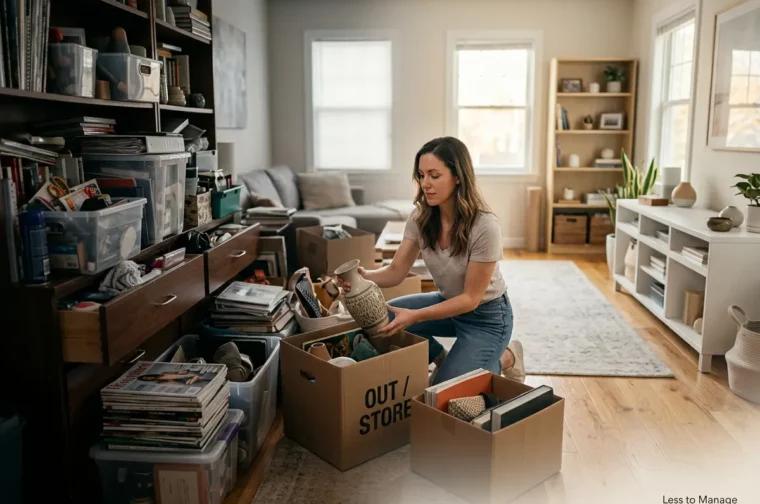
Start small and stop on purpose. Pick one bounded spot (a drawer, a shelf, or one surface), remove only the obvious rubbish and the things that belong elsewhere, and end the session while the space is still manageable. Overwhelm usually comes from trying to decide everything at once, so the fix is to shrink the decision, not to find more motivation.
This guide gives you a first-session plan you can follow today. It is about the situation where there is too much stuff and you do not know where to begin. For the broader basics, see how to start decluttering; for a bedroom-specific approach with ADHD in mind, see the ADHD bedroom decluttering guide.
Why You Feel Stuck (and Why It Is Normal)
People in online decluttering communities describe the same pattern again and again: they pull everything out, run out of energy, and end up with a bigger mess than they started with. Others freeze because every object seems to require a decision. These are common reported experiences rather than a clinical finding, but they point to a practical lesson. A good plan limits how much you take on, keeps the room usable at all times and makes the first win small enough to finish.
Rule 1: Do Not Empty the Room
Many guides tell you to take everything out of a space before sorting. When you are overwhelmed, that advice can backfire, because you create a bigger pile than you can process. Instead, work in place. Choose one container, one shelf or one clear area and leave the rest of the room alone until later. If you need a physical limit, use a single laundry basket or bin and work only on what fits in it.
Rule 2: Choose a Starting Zone That Will Not Hurt
Where you start matters. Pick something visible and low in emotion:
- A kitchen counter, entryway surface or bedside table.
- The bathroom cabinet under the sink (see the bathroom decluttering guide).
- A single drawer of items with obvious duplicates.
Avoid paperwork, photographs, gifts and sentimental items for your first session. They take the most thought and make it harder to finish. When you are ready, how to let go of emotional attachments covers them separately.
The First-Session Plan
Set a timer for 20 to 30 minutes. You can adjust the time, but decide it before you start. Get one bag for rubbish and recycling, one bag or box for donations, and one basket for things that belong in other rooms.
- Remove the obvious rubbish. Packaging, broken items, expired products, dried-out pens, and old receipts you do not need.
- Collect dishes and laundry. Put them where they belong without starting a cleaning project. SELF's guide for overwhelmed cleaners suggests separating trash, dishes, laundry, items that have a place and items that do not, and not trying to tidy and organize at the same time.
- Put away things that already have a home. Use the basket for items from other rooms and return them in one trip at the end.
- Decide on easy donations. Duplicates, things that no longer fit, and things you dislike. Do not debate. If you need more than a few seconds, leave the item for now.
- Return keepers. Put the obvious keepers back neatly in the cleared space.
Example: A bedside table has cups, receipts, charging cables, tissue packets and three half-read books. In 20 minutes you bin the receipts and tissue wrappers, return the cups to the kitchen, coil the cables into one pouch, and put two books back on the shelf. The surface is clear and you stopped with energy left.
Use a Stop Rule
A stop rule is what prevents you from sliding into an exhausting marathon. Decide in advance what ends the session: the timer, one full donation bag, or the end of one shelf. When the stop point comes, finish the last item and stop. Then do two small closing actions: tie up the bags, and write down the next zone on a sticky note. It is better to leave a tidy small area than a half-finished large one.
Get the Outgoing Items Out of the House
The most common failure after a session is leaving bags in the hall. Put the donation bag by the door or in your car, and pick a day for the drop-off. If you are unsure what can be donated, sold or recycled, use our guide to what to do with decluttered items, which also covers items such as batteries, medicines and recalled products that should not be donated.
Decide the Next Session Before You Stop
The Real Simple "3-item" approach suggests choosing a time and day each week and selecting three items to donate or discard. This is an editorial tip, not a tested program, but it shows the principle: a small, regular commitment is easier to keep than a big plan. Try one of these options:
- Daily mini-session: 10 minutes, one container.
- Weekly session: 30 minutes on the same day each week.
- Weekend session: One zone, one hour, with a stop rule.
Some publishers promote a "one room, one hour" method. It can work for a moderately cluttered room, but a full room in an hour is unrealistic for heavy clutter, so treat it as an option rather than a target.
What If You Have Too Much Stuff for This to Work?
If you are dealing with a very large amount of belongings, work category by category rather than room by room. Start with rubbish and obvious duplicates; the declutter checklist breaks the home into manageable pieces. If you feel stuck even with small steps, motivation tools can help; see declutter motivation.
When Decluttering Advice Is Not Enough
Clutter on its own is not a diagnosis, and a checklist is not a treatment for any mental health condition. Consider getting support from a doctor, a mental health professional or a qualified professional organizer if clutter is causing distress, if you cannot discard anything without severe anxiety, or if the situation affects your daily functioning. Get local help urgently if exits or stairways are blocked, utilities are inaccessible, or there is spoiled food, pests or other sanitation or safety hazards.
Common Mistakes
- Emptying everything first. It creates a bigger mess than you can finish.
- Starting with sentimental items. Begin with low-emotion items to build momentum.
- Organizing before decluttering. Buying bins before you remove excess just rearranges the problem.
- Leaving the donation bag in the house. Schedule the drop-off.
- Making a giant "maybe" pile. If you need one, use one box with a size limit and a review date.
Your First 30 Minutes: Quick Checklist
- Pick one small zone and set a timer
- Prepare a rubbish bag, a donation bag and a "belongs elsewhere" basket
- Remove rubbish, then dishes and laundry
- Return items to their homes
- Choose easy donations only
- Stop when the timer ends
- Take the bags out and write the next zone on a note
Your Next Step
Choose the single smallest surface in your home that bothers you. Set a 20-minute timer, do the five steps above and stop when it rings.
Frequently Asked Questions
How do I declutter when I have too much stuff?
Work on one small zone or category at a time. Remove obvious rubbish and duplicates first, avoid sentimental items at the start, and use a timer with a stop rule.
Where should I start decluttering my house?
Start with a visible, low-emotion area such as a counter, a drawer or a bedside table. Avoid papers, photos and keepsakes for your first session.
Should I take everything out before I sort it?
Not if you feel overwhelmed. Emptying a whole space can create more mess than you can process. Work in place, or limit yourself to one container at a time.
How long should a decluttering session be?
There is no single correct length. A 20 to 30 minute session with a stop rule is a practical starting point for many people; adjust to your energy.
Sources and Further Reading
- SELF — 5 Expert Cleaning Tips for When You're Feeling Overwhelmed
- Real Simple — This Simple 3-Item Decluttering Rule
- Yahoo Lifestyle — The 'One Room, One Hour' Decluttering Method
- Reddit r/declutter — Feeling overwhelmed…but want to declutter (community discussion, not authoritative evidence)
- Reddit r/declutter — I feel so overwhelmed when I try organizing (community discussion, not authoritative evidence)