How to Get Rid of Things You Are Emotionally Attached To
Ad Slot — Below Title
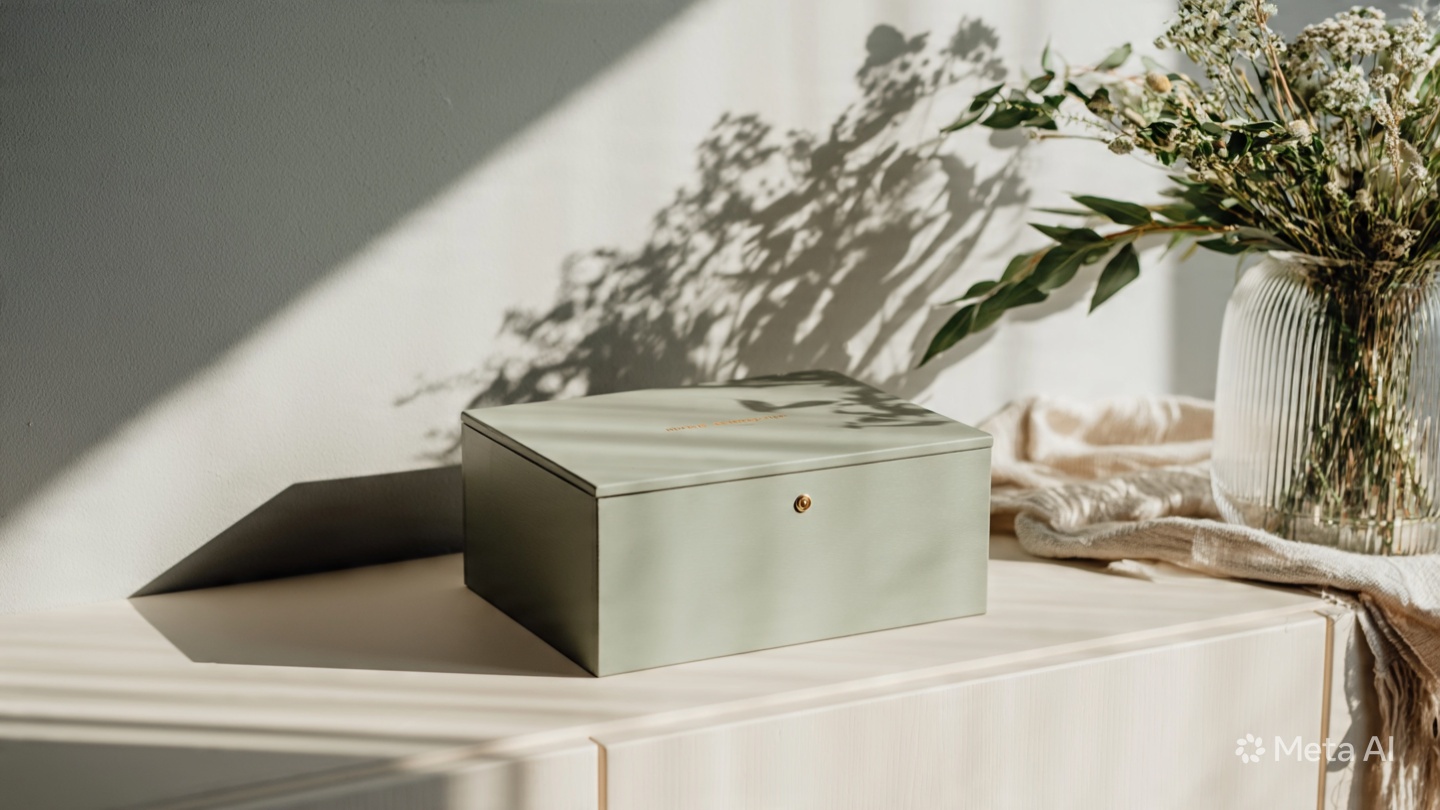
A compassionate guide for the moments when decluttering feels less like tidying and more like saying goodbye.
Margot Ellis · Updated May 2026
A compassionate guide for the moments when decluttering feels less like tidying and more like saying goodbye.
"The things we own end up owning us —
until we choose to remember differently."
here is something no decluttering checklist tells you: the hardest part of letting go is not the decision. It is the moment you hold the object in your hands and suddenly you are twenty-two again, or eight years old, or standing in a kitchen that no longer exists. The thing in your hands is not a thing at all. It is a door.
This guide is not about ruthlessness. It is not about the cold satisfaction of an empty shelf. It is about something gentler and harder: learning to carry your memories in a lighter way. About understanding that the love attached to an object does not disappear when the object does.
If you have ever stood over a box of your mother's things, or your child's first drawings, or a gift from someone who is no longer here — and felt completely frozen — this is written for you.
Attachment to objects is not a flaw in your character. It is a feature of human memory. Psychologists call it the endowment effect — we assign greater value to things we own than to identical things we do not, simply because they are ours. But with sentimental items, something deeper is happening.
We use objects as memory anchors. The chipped mug is not just a mug — it is Sunday mornings with your dad. The worn jacket is not just worn — it is a version of yourself you are not sure you have the right to release. These objects stand in as proof: proof that something happened, that someone existed, that you were loved.
The good news: it can. Memory is not stored in matter. It is stored in you. What we are really doing when we learn to let go is not discarding the past — we are learning to trust ourselves to carry it.
Each one asks something different of you. Choose the one that meets you where you are.
One box. Not a tub. Not a crate. A single, beautiful box — the kind you would be proud to pass to someone you love — for each chapter of your life.
Childhood. Your twenties. A relationship. A home you left behind. Each chapter gets its own container, and that container has a limit. When the box is full, it is full. If a new item matters enough to enter, something else must be honored and released.
The constraint is not cruelty — it is curation. It forces you to ask: of everything that happened in that season of my life, what are the true artifacts? What tells the story most honestly?
Before you let something go, photograph it with care. Not a hasty snapshot — a real one. Good light. The object as it truly looks, with its scuffs and wear and particular beauty.
Then write a caption. Even three sentences: Who gave this to you. What it meant. What you want to remember about that time. Save the photo and caption to a digital album named for that chapter of your life.
Google Photos, iCloud, a private Notion journal — wherever you keep your most meaningful things. Then release the physical object.
You are not erasing the story. You are moving it to a lighter medium. The album grows richer as years pass. The physical clutter does not.
This is the deepest shift, and it changes everything once it lands.
We believe, without realizing it, that releasing the object means releasing the love. That if we donate your grandmother's dress, we are somehow abandoning her. That if we let go of the stuffed animal from childhood, we are saying the childhood did not matter.
But consider this reframe: you are not getting rid of the memory. You are freeing it from the weight of the object.
Your grandmother is not in the dress. She is in the way you hold your coffee cup, in the phrases you use without knowing where they came from, in the recipes you make by feel. The dress was always just a door to her — and you can walk through that door without carrying the door with you.
Letting go, done with intention, is an act of respect — for the memory, for the person, and for the self that is still here and still becoming.
Guilt is the most common companion in this work. It shows up as: But they gave this to me. But she would have wanted me to keep it. But what if I regret it?
Sit with the guilt rather than immediately trying to argue it away. It is pointing at something true — that this object held real love, real meaning. Honor that for a moment. And then ask: Does holding onto this object serve that love, or does it just make me feel less guilty?
Keeping everything out of loyalty is a way of saying: I do not trust my own heart to remember. But you do. You always have.
Letting go with intention — with a photograph, a written memory, a whispered thank-you — is not abandonment. It is a ceremony of gratitude. It is saying: I received this. It mattered. I am ready to carry the meaning without the weight.
You do not have to empty the whole house today. Start here, gently.
Choose one small category first.
Not your late mother's things. Not the childhood box. Start with something slightly sentimental but not devastating — old cards, duplicates, items from a job you have already moved on from mentally.
Ask the one honest question.
Not "do I love this?" (you might say yes to everything). Ask: "If I released this today, would the memory remain?" The answer, almost always, is yes.
Photograph before releasing.
Even for small items. The act of photographing forces you to look carefully — often for the first time — at what the object actually was, and what it truly meant.
Do not work alone if you are grieving.
A kind friend, a sibling, a therapist — someone who knew the person or the time — can hold the emotional weight with you. This is not weakness. It is wisdom.
Give yourself a completion ritual.
After a session of letting go — even a small one — mark it. Make tea. Take a walk. Write a line in a journal. Tell your body that something real just happened, and that it was an act of love.
You are not decluttering. You are curating the story of your life. The things that remain in your Memory Box, in your home, in your hands — they should be the ones worth carrying. The rest were never meant to travel this far with you.
Your future self — lighter, freer, surrounded by only what truly matters — is waiting on the other side of this work. They are grateful you had the courage to begin.