Reselling in a Studio: Organization Hacks for Tiny Workspaces
You're running a real reselling operation from a space where your bed is ten feet from your shipping scale. The chaos isn't a character flaw — it's a systems problem. And systems problems have boring, reliable solutions.
This article is for the reseller working in a studio apartment, a converted bedroom corner, or any space where "the office" and "the bedroom" are the same room. I've combed through threads on r/Flipping, r/Poshmark, and small-space ergonomics research so you don't have to. What I found: the people thriving in tiny reseller spaces aren't doing anything magical — they're just micro-zoning with intention.
The keyword we're solving for: reseller workspace organization ideas for small spaces.
Why Small Reseller Spaces Break Down (It's Not What You Think)
The #1 complaint I see on r/Flipping from apartment resellers isn't lack of space — it's mental contamination. When your photo backdrop is three feet from your pillow, your brain never gets a clean "off" signal. Work bleeds into rest, rest bleeds into work, and both suffer.
The second complaint is setup/teardown fatigue: dragging out ring lights, moving the coffee table, taping down backdrops — and then undoing all of it so you can eat dinner. This daily friction is the #1 reason resellers abandon consistent listing habits. The fix isn't a bigger apartment. It's a permanent, compact zone that never fully gets put away.
Step 1: The Small-Space Audit
Before you buy a single shelf, you need an honest inventory of your square footage — not to feel bad about it, but to stop fighting it. Grab a tape measure and answer these four questions:
- What are your dead zones? — The space behind a door, the 12 inches above a closet rod, the gap beside the fridge. These are your hidden square footage.
- What surfaces are doing double-duty? — If your dining table is also your packing station, that's a zone conflict. Name it honestly.
- Where does natural light actually land? — Walk your space at 10am on a cloudy day. That spot is your best photo zone candidate.
- What is your "visual off switch"? — Identify one corner, curtain, or folding screen that can visually separate workspace from living space when you clock out.
Redditors in r/Flipping who resell from apartments consistently report that lofting a bed or using the space under a raised platform bed creates enough floor area for a 2-rack clothing system plus a packing table — without touching the living area at all. [web:1] One seller running 300+ items worked entirely out of a spare room with a small closet using labeled poly-bag totes and a double-layer rolling rack — proof that systems outperform square footage. [web:4]
Step 2: Zone Planning for Tiny Reseller Spaces
The golden rule: one zone, one job. Even if your entire "studio office" is a 6×6 corner, divide it into three micro-zones. Mixing them is what creates the overwhelm spiral.
Zone A — The Photo Corner (Permanent, Never Breakdown)
The biggest source of listing fatigue in small spaces is tearing down and rebuilding your photo setup every single day. [web:5] The solution is a dedicated corner that stays set up permanently — even if it's just 24 square inches of wall.
- Mount a folding shelf bracket or a floating shelf at chest height as your permanent flat-lay surface — it folds flat against the wall when not in use.
- Use a collapsible lightbox (under $30) that collapses like a pop-up laundry hamper — stays in the corner, opens in 10 seconds, no light stand required.
- If you shoot apparel on a mannequin or hanger, a single corner-mounted tension rod at ceiling height gives you a permanent hanging backdrop without drilling.
- Tape a strip of foam board or white poster board to the wall as a fixed background. Mark the floor with painter's tape so you always position items in the same spot — consistent photos, no setup thinking.
- Keep your phone/camera tripod pre-set and folded beside the corner, not in a closet. Friction kills consistency.
Zone B — The Listing Station (Vertical & Compact)
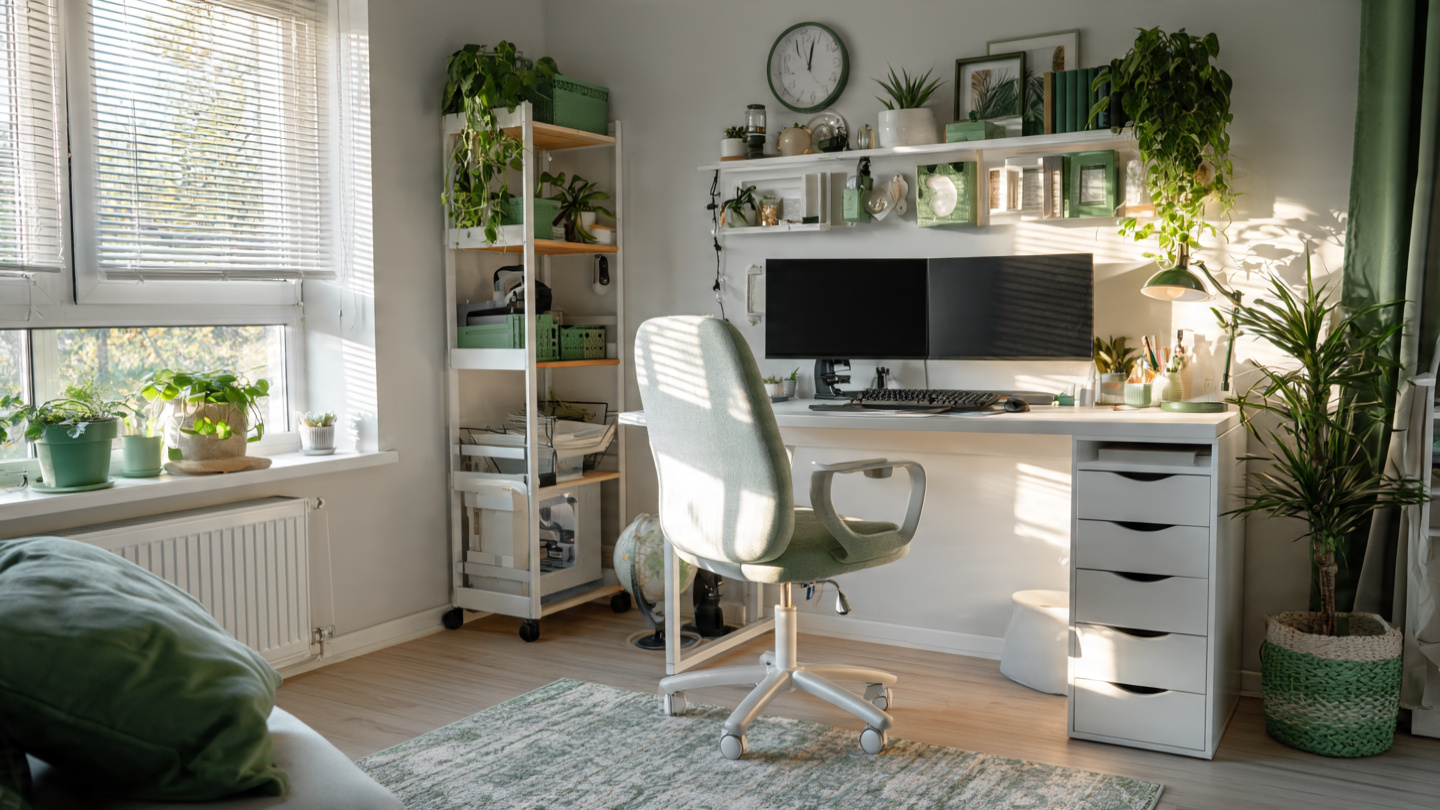
Your listing station is where you measure, keyword, price, and publish. In a small space, this is almost always a wall-mounted fold-down desk or a compact rolling cart that doubles as a laptop stand.
- A 3-tier rolling cart (IKEA Råskog or any dupe) is the unofficial mascot of small-space resellers: Tier 1 = items ready to list, Tier 2 = listing supplies (tape measure, garment steamer, tags), Tier 3 = listed-and-waiting-to-sell.
- Store your listing notes template on a clipboard hung on the wall — title, description, keywords, price floor. You're not reinventing the wheel every session.
- Use vertical wall strips with S-hooks above the desk for scissors, tape, and markers. Counter space is real estate — protect it.
Zone C — The Ship Station (Door-Adjacent, Always Ready)
Your ship station should live as close to your front door as possible. Community wisdom from r/Flipping is consistent here: items that are sold but unshipped should never travel back into your inventory area. [web:1] They are done. They live by the door.
- Use a small over-door organizer for flat shipping supplies: poly mailers, bubble wrap sheets, tape rolls, a marker.
- One lidded bin or tote beside the door holds sold-and-packed items. When it's full (or on shipping day), it goes out. That's the system.
- A kitchen postal scale sits permanently on top of this bin — no putting it away, no finding it later.
- Pre-print labels in batches during your listing session. Attach them immediately so the ship-station bin is always ship-ready.
Vertical Storage: Your Most Underused Dimension
In a small space, you have exactly as many square feet as you have — but you likely have 8 to 9 feet of vertical space you're not using. This is where small-space resellers recover meaningful capacity without moving to a larger home.
- Floor-to-ceiling shelving units (adjustable wire shelving or melamine) along one wall can hold labeled bins for unlisted inventory, listed inventory by tote number, and shipping supplies — all in a 12-inch-deep footprint.
- Double-hanging closet rods convert a standard closet into storage for 2x the clothing inventory — tops on top, pants and folded items below.
- Stackable clear bins with lids, labeled by category or tote number on the front face (not the top), let you read inventory at a glance without unstacking.
- The space above your wardrobe or fridge is ideal for bulky, low-frequency items: mannequins, backdrop rolls, extra boxes, off-season inventory.
- Experienced small-space resellers report managing 300+ items with a combination of labeled poly bags, numbered totes, and a simple spreadsheet — none of which requires floor space. [web:4]
The Mental Boundary Problem (And Its Boring Fix)
Living in your workspace means your nervous system never gets a genuine "closed" signal. This is documented in remote-work ergonomics research and echoed constantly in r/Flipping threads: the inability to mentally switch off when your bed and your packing tape share a zip code.
The fix is not a bigger apartment. It is a visual and physical ritual that signals "closed." Think of it like a shop pulling its shutters down for the night — the inventory is still there, but the store is not open.
- A fabric room divider or curtain on a tension rod that hides the workspace corner when you're off the clock. Out of sight = out of mind is neurologically real.
- The rolling cart from Zone B gets rolled into a closet or behind the divider at end-of-day. This one physical act trains your brain that the shift is over.
- Keep a small "open" / "closed" sign on a hook — corny, but effective. Several r/Poshmark sellers swear by symbolic boundary rituals for preventing burnout.
The Weekly Workspace Reset Ritual
A tiny workspace that isn't actively maintained devolves into chaos within 72 hours. This is not a motivation problem. It is a maintenance schedule problem. Enter the Weekly Workspace Reset — a 20-minute ritual that runs every Sunday evening (or your own equivalent "day before work week begins").
The reset has exactly five steps, in order:
- 1. Clear all surfaces. Every item on the packing table, listing station, and photo corner gets put back in its designated zone bin. If you don't know where it belongs, that item earns itself a permanent labeled home before Sunday is over.
- 2. Restock supplies. Check: poly mailers, tape, bubble wrap, printer paper, labels. Reorder anything below your two-week buffer. Running out mid-week is an organization failure, not a shopping failure.
- 3. Audit the ship bin. If there are sold items that haven't shipped, they get packaged right now, during the reset. No exceptions.
- 4. Update your tote/bin log. Spend five minutes matching your physical inventory totes to your spreadsheet. One discrepancy caught on Sunday saves forty minutes of searching on Wednesday.
- 5. Set the scene. Wipe down the listing surface, straighten the photo corner, confirm the lighting is ready. You're not cleaning — you're setting up tomorrow's version of yourself for a frictionless start.
The reset is the difference between a workspace that works for you and one that slowly works against you. It takes under 20 minutes when done weekly. It takes a half-day when skipped for three weeks.
Quick-Reference: Small Reseller Space Setup
| Zone | Key Furniture | Storage Method | The Rule |
|---|---|---|---|
| Photo Corner | Collapsible lightbox, corner tension rod | Stays set up — never fully packed away | Zero setup time = zero excuses |
| Listing Station | Rolling 3-tier cart, fold-down desk | Tiered cart by listing status | One zone, one job |
| Ship Station | Over-door organizer, lidded tote | Sold items never re-enter inventory | Door-adjacent = shipped on time |
| Inventory | Floor-to-ceiling shelving, double closet rod | Numbered totes + poly bags + spreadsheet | Label the front face, not the top |
The Honest Truth About Small-Space Reselling
After six years of trial and error, the resellers who make it work in tiny spaces share one trait: they stopped waiting for a bigger room and started engineering the room they had. [web:5] The systems above are not aspirational. They are documented, functional, and actively used by real resellers running real volume from 10×10 rooms, studio apartments, and glorified closets. [web:4]
The mess you're currently living with isn't evidence that you can't do this. It's evidence that you haven't installed the right systems yet. That's a solvable problem. Start with the audit. Build one zone at a time. Do the Sunday reset without skipping it for four weeks. Then tell me the space feels small.