Downsizing Checklist for Seniors and Caregivers
A calmer downsizing plan starts with the new space, secures documents early and breaks decisions into short, manageable sessions.
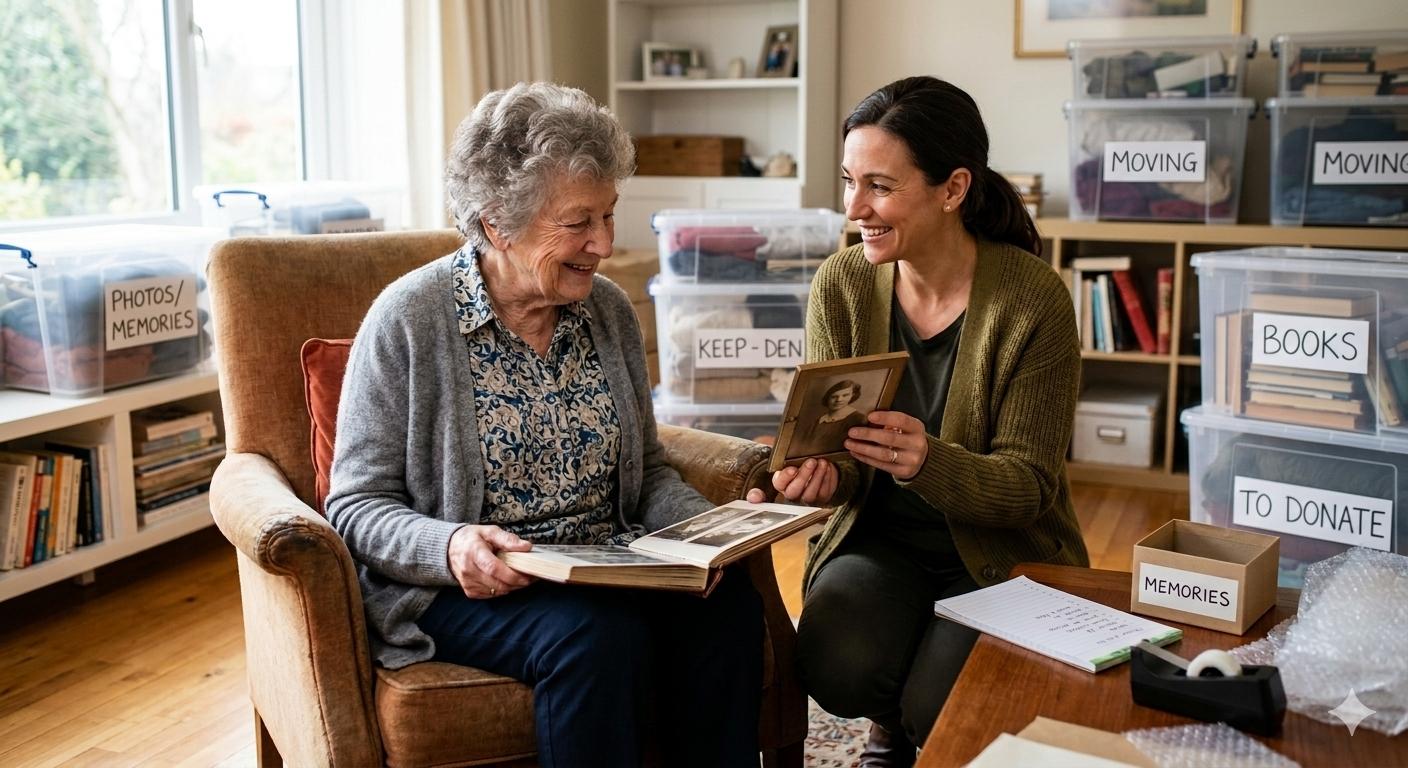
Downsizing later in life is rarely just about square footage. It is usually tied to a move, changing mobility, household loss, health needs, simplified upkeep or the need to be closer to support. That means the project is both practical and emotional. A good downsizing plan needs to respect both.
For seniors and caregivers, the biggest mistake is often waiting until every decision becomes urgent. A calmer process starts earlier, breaks the move into smaller steps and protects the items, papers and routines that matter most. This guide is designed to help with exactly that.
What downsizing really requires
Downsizing is not just “getting rid of things.” It involves measuring the new space, deciding what daily life needs to work there, identifying what is most meaningful, handling paperwork carefully and setting up practical routes for selling, donating, gifting, recycling and discarding. If more than one family member is involved, it also means assigning roles and reducing confusion.
Family Caregiver Alliance advises starting six months to a year ahead when possible, collecting important papers together, working one room at a time and keeping sorting sessions reasonably short for the older adult. That guidance is especially useful because it respects the pace and stress of the move rather than treating it like a quick clear-out.
Start with the destination
Before making major item decisions, understand the new home. How many rooms are there? What storage already exists? Where will the bed, sofa, table, favourite chair and essential furniture go? What will not fit through the doors or into the floor plan? When you know the real dimensions of the new space, decisions become easier because they are tied to actual limits instead of guesswork.
If possible, sketch a rough floor plan. Mark door swings, windows, built-in storage and walkways. This step prevents people from carrying large furniture through the whole emotional sorting process only to discover later that it does not fit.
Protect important documents first
Gather legal, financial, medical and identity documents before you start heavy sorting. This may include wills, property records, passports, birth certificates, medical papers, insurance records, military records, account details and powers of attorney. Keep them together in one secure place that key family members know about.
Important papers are easy to lose in the middle of downsizing because they are often mixed with ordinary files, old envelopes and sentimental letters. Securing them first lowers risk and allows the rest of the sorting to feel safer.
Set roles if more than one person is helping
Caregivers and family helpers are most useful when responsibilities are clear. One person can handle scheduling, one can manage donation drop-offs, one can research values or appraisals, and one can help document who wants which family items. Without clear roles, helpers often duplicate work or push the older adult to make decisions too quickly.
The person moving should remain the decision-maker whenever possible. Practical help works best when it supports autonomy rather than taking over unnecessarily.
If you’re coordinating a parent’s move or downsizing, the Aging Parent Downsizing Command Center can help you organize item decisions, family preferences, and tasks in one place — with your parent’s wishes written down before the family talks.
Use a four-way sorting system
Sort each room into four categories:
- Keep: essential, beloved or clearly useful in the new home
- Maybe: review later if time and energy allow
- Give away, donate or sell: useful items leaving the home
- Discard or recycle: unusable, broken, expired or unnecessary items
Color-coded stickers, labels or simple masking tape can help. What matters most is consistency. When the categories stay clear, the move stays calmer.
Go one room at a time
Room-by-room sorting keeps the process from becoming too abstract. Start with the easiest room or category, not the most emotional one. Bathrooms, linen cupboards, duplicate kitchen tools and obvious household overflow often make good starting points because the decisions are simpler. Success there builds trust in the process before you reach heavier categories such as paperwork, photo collections or inherited furniture.
Family Caregiver Alliance also recommends limiting sorting and packing time for the older adult rather than turning the day into a long, exhausting marathon. Short sessions often lead to better decisions and less conflict.
Handle sentimental items with care, not speed
Sentimental belongings need a different pace. A favourite teacup, military medals, an old recipe box, children’s art or a spouse’s clothing may carry meaning beyond daily usefulness. The goal is not to remove emotion from the process. The goal is to make room for it without letting every decision stop the move entirely.
Useful questions include: does this item need to move with me, can it be displayed rather than stored, can one representative item stand for a larger collection, and would a photograph preserve the memory well enough if the object cannot come?
Helping an Aging Parent Downsize?
The Aging Parent Downsizing Command Center gives you one place to track belongings, record your parent’s wishes, and organize family decisions and moving tasks — from the first sort to moving day.
Explore the Downsizing Command CenterFurniture decisions should be practical, not only sentimental
A large dining table may have hosted decades of family meals, but if the new home has no space for it or it limits safe movement, keeping it may create a daily burden. Start with the must-have furniture that supports current life and health needs. Then decide what else can fit physically and functionally around it.
Be especially careful with furniture if mobility devices, walkers or easier access are now part of daily life. Space to move safely matters more than squeezing in every familiar item.
Create a clear plan for outgoing items
Not everything leaving the home needs the same route. Some things can be offered to family, some donated, some sold and some recycled or discarded. A simple item-exit plan prevents outgoing objects from turning into a new layer of clutter.
- Family keepsakes: document who wants what and by when it will be collected.
- Donations: group by destination and confirm what each organization accepts.
- Sales: reserve for items with realistic value and a realistic time window.
- Recycling and disposal: separate electronics, batteries, medicines and hazardous household items for the correct local route.
Be careful with medicines and safety-sensitive items
Unwanted or expired medicines should not simply be thrown into ordinary donation streams. Health Canada advises returning unused and expired medicines to a pharmacy and not flushing them down sinks or toilets. Australia’s Return Unwanted Medicines Program also uses participating pharmacies as the correct return route. If you are helping with a move in another location, check the local authority or pharmacy guidance.
Likewise, older electronics, batteries and certain household chemicals may need a separate drop-off route. These details matter because downsizing often uncovers long-stored items that were easy to ignore for years.
Prepare the first-day essentials separately
Pack one clearly marked bag or box for the first night and first few days. Include medications, chargers, key documents, toiletries, a change of clothes, basic kitchen items, glasses, mobility aids and any comfort items needed right away. This small step lowers stress dramatically during the move because the new home becomes functional faster.
What to do if family members disagree
Disagreement often appears around inherited objects, furniture and items with emotional value. A useful approach is to separate ownership questions from moving logistics. The immediate move still requires a practical decision about where the item goes next, even if a longer family conversation about final ownership continues afterward.
When there may be significant financial, historical or collectible value, pause before donating or discarding. Research or appraisal is often wiser than a rushed decision.
A simple downsizing checklist
- Measure the new home and note storage limits
- List essential furniture and daily-use items
- Secure important documents in one place
- Assign helper roles if family or caregivers are involved
- Sort one room at a time into four categories
- Start with easy, low-emotion areas
- Set clear pickup, donation and disposal dates
- Prepare a first-night essentials box
- Keep sessions short enough to avoid exhaustion
- Review sentimental and valuable items separately when needed
Common downsizing mistakes
- Starting with the hardest room. This raises stress before the process has any momentum.
- Guessing what will fit in the new home. Measurements prevent many regrets.
- Letting helpers make every decision. Support should not erase the older adult’s voice.
- Mixing important papers with ordinary clutter. Secure them first.
- Trying to sell too much. Sales take time and can delay the move.
- Ignoring safe disposal rules for medicines, batteries or electronics. Some items need specialist handling.
A calmer way to think about the move
Downsizing is easier when the goal is not “fit an entire life into less space.” A better goal is to bring forward the items, documents and routines that support the next stage of life well. That creates a more practical and more compassionate filter for every decision that follows.
Frequently Asked Questions
When should seniors start downsizing before a move?
When possible, it helps to begin months in advance rather than waiting for the final weeks. Starting earlier allows decisions to happen in shorter sessions and reduces rushed choices.
What should be sorted first when downsizing for an older adult?
Start with practical, low-emotion areas such as bathrooms, linens, duplicate kitchen tools or obvious overflow. Save paperwork, keepsakes and inherited items for later sessions.
What documents should be protected during downsizing?
Gather important legal, medical, financial and identity records in one secure place before deep sorting begins. This lowers the chance of losing critical papers in the process.
Should everything valuable be sold before the move?
Not always. Selling takes time and may delay the move. Reserve selling for items with realistic value and enough time to handle the process properly.